Experiences: LARRESNE
Larresne
December, 2025Smart grazing
Integration of technology and best practices to improve animal welfare while ensuring sustainable practices for society and the environment.
Tell us about your LARRESNE project
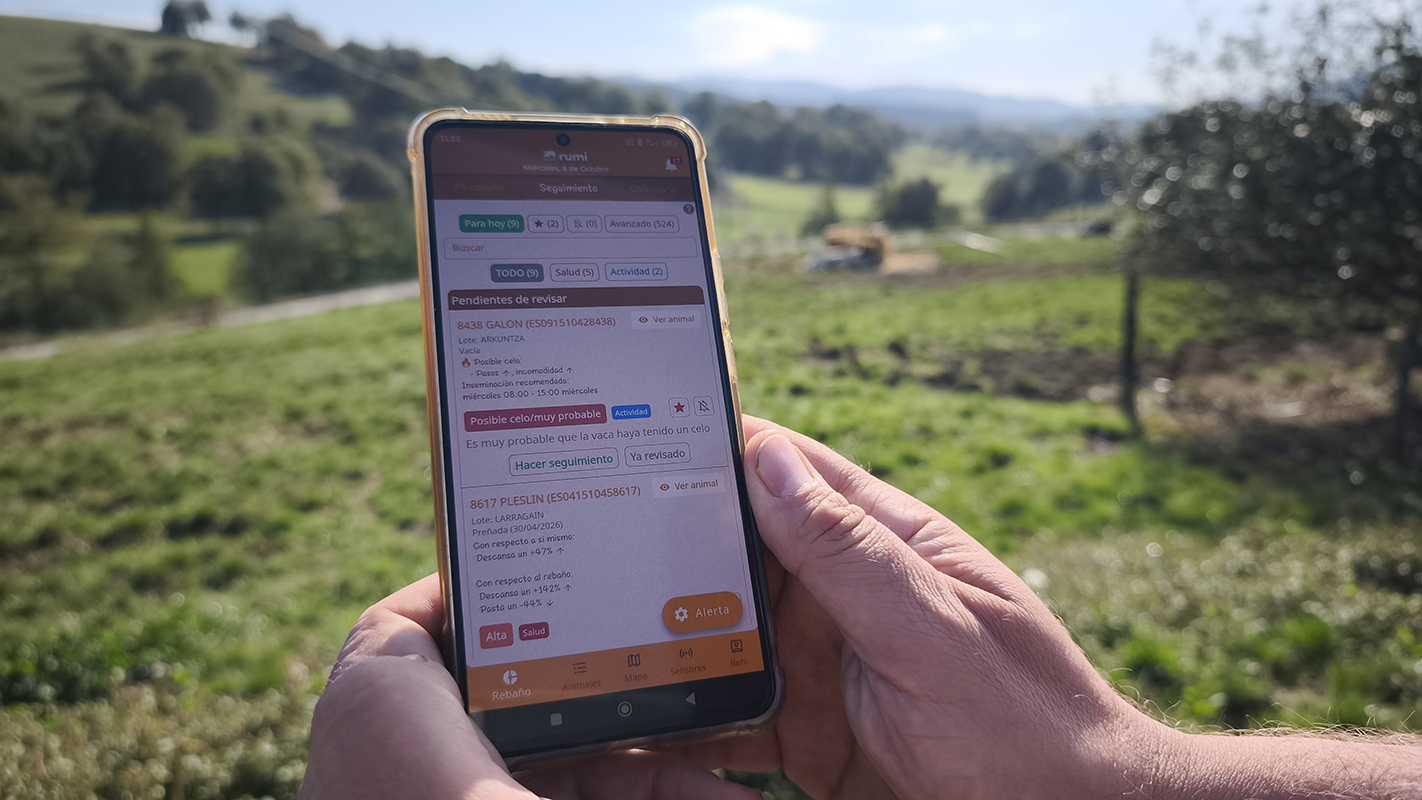
LARRESNE is an operational group that works to integrate technology and livestock practices to respond to the current world we live in, where sustainability, animal welfare, and social responsibility set the new consumer trends. Consumers are looking for food that ensures quality, traceability, and respect for the environment. Current certifications provide information, but do not always reflect the actual grazing of animals. Therefore, digital monitoring of grazing activity is a key tool in responding to this need. With this technology and working methodology, livestock farmers save time, as the system greatly helps them to prevent and detect abnormal animal behavior so they can realize that something is happening. Anticipation is key to animal welfare, as the farmer or shepherd can monitor the herd and see what is happening in real time through alerts on their mobile phone.
What is your added value?
At LARRESNE, our mission is to promote a smart grazing model that integrates technology and best practices to improve animal welfare by ensuring sustainable practices that benefit both animals and the environment, responding to social demands in health, sustainability, and animal welfare. It also strengthens the position of producers in the organization of work, since with the anticipation I mentioned, they can move animals around better and manage them more efficiently, adding value and making daily work a little easier, if possible. After testing the device, we see that this digitization adds value to the market by making life easier for farmers and shepherds, thus contributing to the objectives of the CAP.
What agents make up “Larresne”?
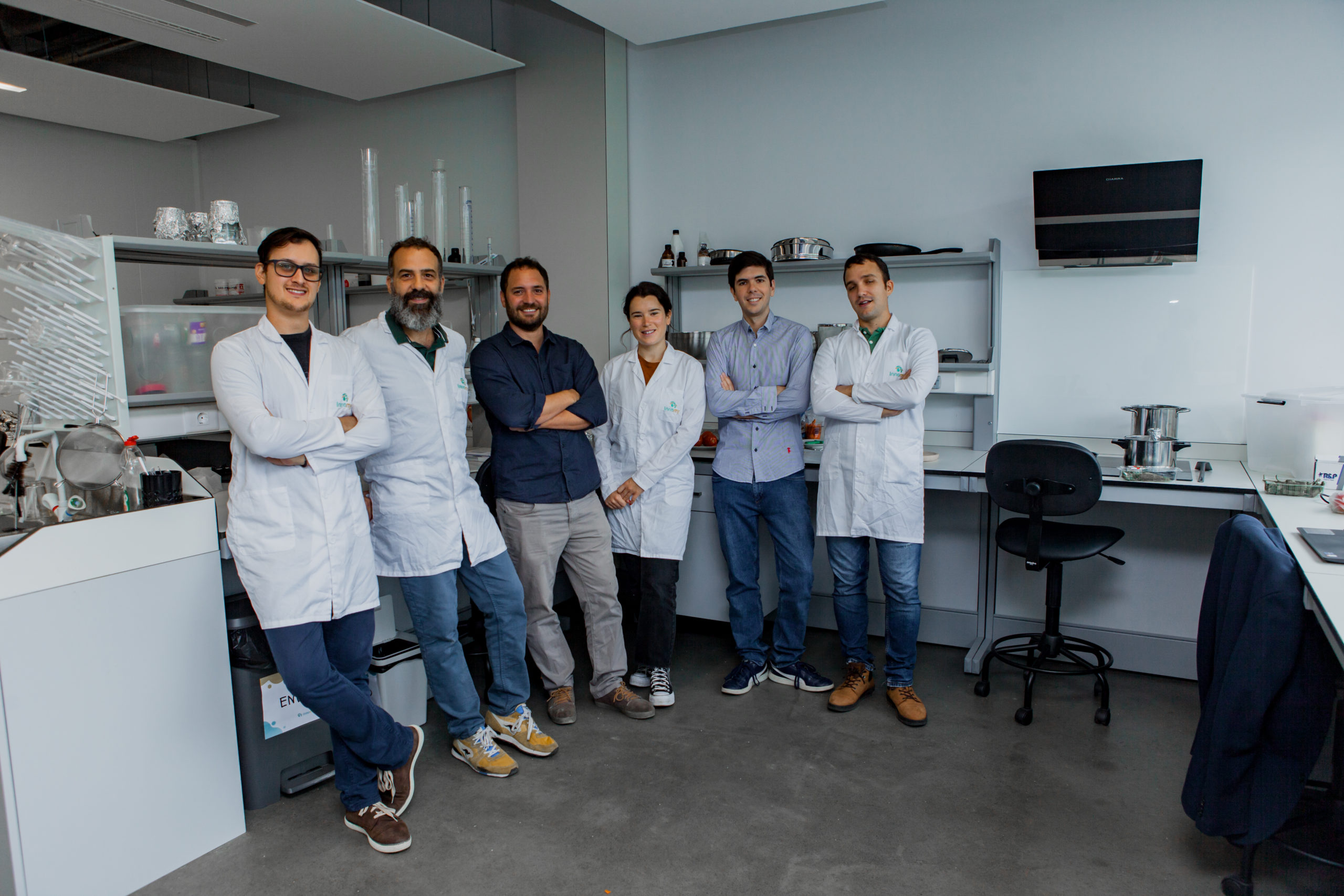
LARRESNE is an operational group made up of companies, technology centers, and entities in the agri-food sector working to develop a smart grazing model. The entities that make up the group are Behi-Alde, Kerixara, Neiker, EIT Food, DOP Idiazabal, and Innogando, with Hazi as a collaborating partner.
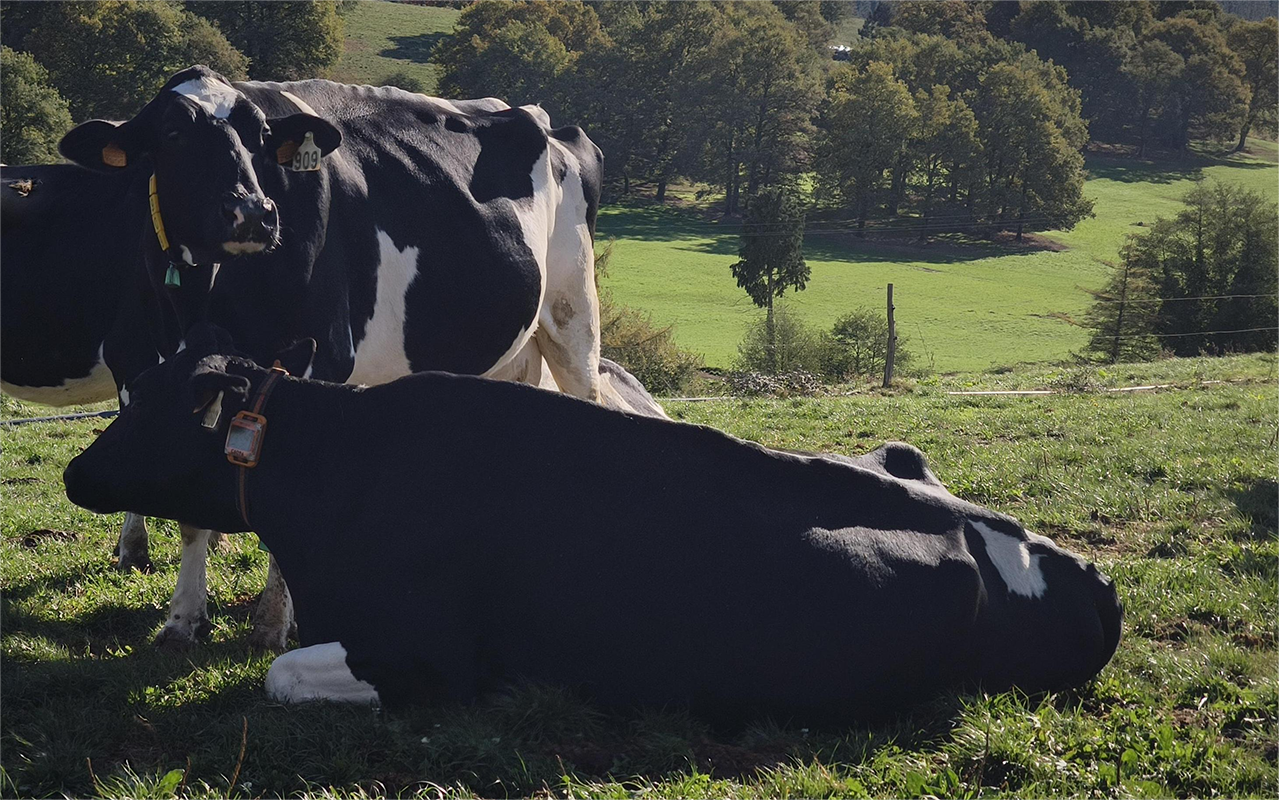
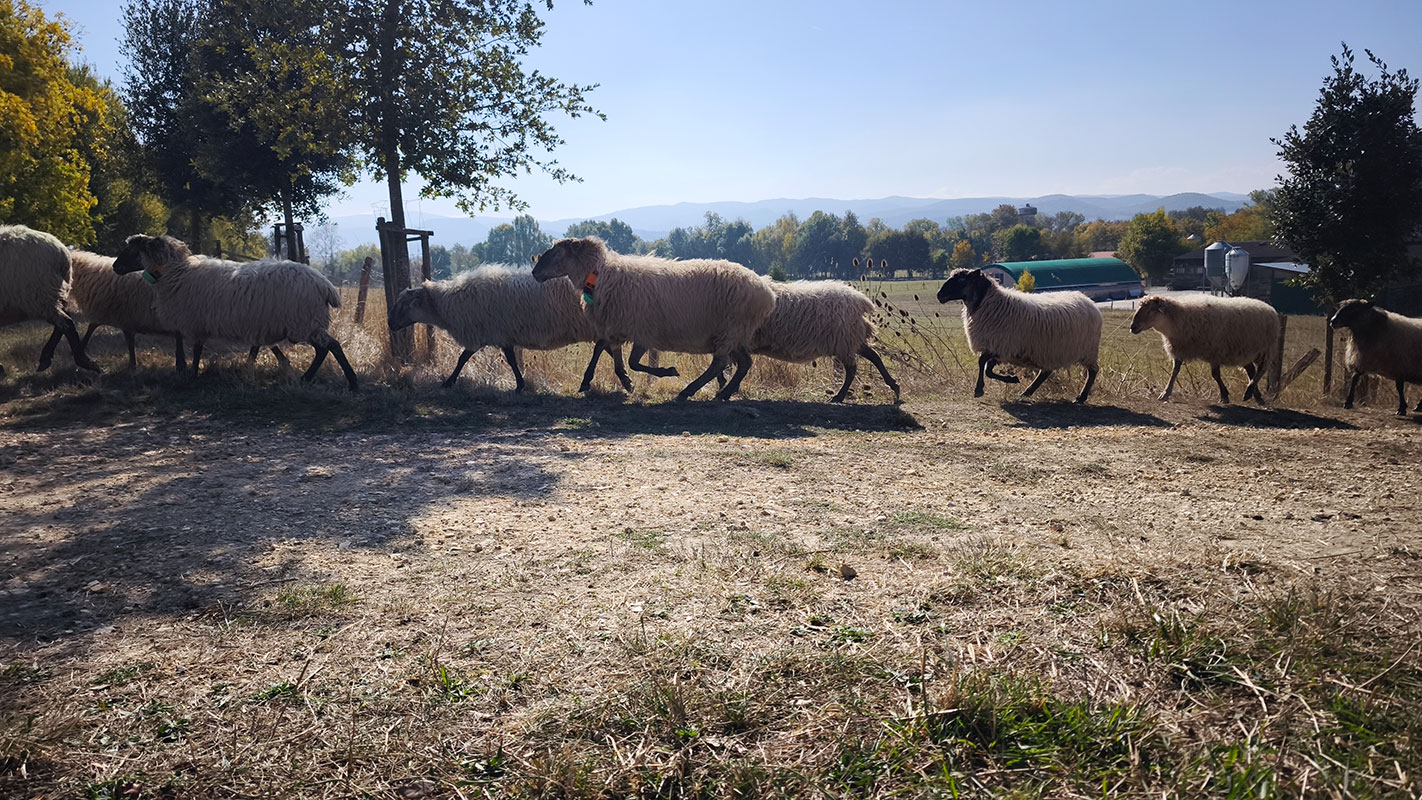
The project applies sensor and animal tracking technologies to improve the welfare of cows and sheep, optimize grazing management, and ensure traceability.
LARRESNE promotes rural innovation, sustainability, and cooperation, integrating technical knowledge and livestock farming practices.
What have been your main challenges in recent months and how have you overcome them?
The challenge of the LARRESNE project is, first and foremost, to estimate the animals’ activities and provide farmers with information on any changes in activity for their daily management of the herd.
It also seeks to differentiate between presence and actual grazing activity using digital technology. We have developed a grazing model that guarantees the health and welfare of the animals and the environment. It is not enough to know whether the animals are in the field; it is important to know whether they are actually eating grass and what they are doing when they are in the field.
To this end, pilot tests have been carried out on livestock farms in the Basque Country, which we detail in the following question, integrating sensor and remote grazing control systems. The results show improvements in management efficiency, animal welfare, and traceability.
What are the next steps?
The commercial validation of the tool in dairy cattle is being carried out in Behi-Alde to measure the benefits in feeding, reproduction, and animal health, where improvements in efficiency and reduction of feeding costs are also analyzed, based on economic and reproductive analysis.
Validation for sheep is being carried out at NEIKER, and Kerexara is testing the devices. The Idiazabal PDO is interested in the tool as a possible element for certifying grazing, and Neiker, as a technology center, is assisting in testing the device.
Therefore, the next steps are the technical and commercial validation of the RUMI device, under the parameters of improved animal welfare, grazing traceability, and sustainability, which will lead to reduced feeding costs and improved health control. With this, we will try to develop a proposal for a grass milk certification protocol, which will be very well received in the sector.
How do you see the livestock industry evolving? (product range, markets, employees, etc.)
The evolution of livestock farming in the coming years will involve becoming more efficient, understanding sustainability from different perspectives, with the fundamental focus being on generating value in the sector with the aim of making it attractive and thus creating quality employment. This will enable us to retain the population in rural areas, making the business sustainable in the long term, which is one of the most important challenges facing the sector at present, given the low rate of generational renewal.
It is also important to highlight the importance of focusing on ranges and products with added value for the consumer, as consumers are increasingly demanding and better informed, with sustainability, animal welfare, and social responsibility setting new consumer trends, as I mentioned at the beginning of the interview. We know that consumers are looking for food that ensures quality, traceability, and respect for the environment.
Therefore, the Larresne cooperation project is in line with all these trends and offers a useful tool for certifications of origin, sustainability, and animal welfare, allowing us to strengthen the link between territory, production-processing, and final product. It also opens the door to integrating new criteria into the Idiazabal PDO and to the ecological transition of the sector, in addition to the transfer of the knowledge generated to other PDOs and certifiers.
How has the Basque public sector helped you?
The Basque public sector has helped us with the project by approving a monetary allocation for aid, corresponding to aid for innovation through cooperation, within the framework of the PAPAC 2023-2027.
The Larresne cooperation project is considered relevant in a priority sector such as agri-food, where initiatives to strengthen the sector are well received, as they are understood to bring value and knowledge to the sector.
It should be noted that Larresne makes a significant contribution, due to the qualitative and innovative leap that characterizes it, bringing quantitative improvements in results to the sector, as it will help farmers in the management of their herds and individual animals, being a device that collects individualized information on a continuous basis, thus enabling continuous monitoring.
It also opens the door to future certifications with digital technology to ensure data accuracy and really know what the animals are doing. It is not enough to rely on evidence or estimated behavior patterns; we need to actually go to the pasture with objective and measurable data over time, as current certifications provide information but do not always reflect the actual grazing of the animals. Therefore, digital monitoring of grazing activity is a key tool in responding to this need.
What would you recommend to someone who is just starting out?
The recommendation for someone who is just starting out would be to carefully consider what they want to be in life, what life plan they want to follow, and above all, what business model they want to pursue, in order to see where they should focus their efforts. What must be clear is that innovation and digitization in the sector are key to becoming an increasingly professionalized sector and that the sector needs added value in order to diversify, as demonstrated by initiatives such as the Larresne cooperation project.
What is your experience within the European project and what would you highlight in terms of innovation in cooperation?
Our experience within the European project has been satisfactory, as the working group has worked perfectly together to achieve the proposed objectives. I would also like to highlight that this type of cooperation project enriches the sector and also the different entities within the working group. Seeking synergies between the participants in the working group has been enriching, and above all, bringing together cattle and sheep has been a successful move.
Perhaps we would have liked to have had a little more time to develop some areas in greater detail, especially given the seasonal nature of some tasks, but even so, we are satisfied with the progress of the project. It should be noted that its high potential is having a significant impact on the sector, given the innovative nature of the project, and it is also generating excitement among young people in the sector, which shows that innovative initiatives with a significant technological component are well received, as we are seeing in agricultural training centers..