
Aids for projects under the Participatory Local Development Strategy (PLD), approved for the Fisheries Local Action Group (FLAG) for the sustainable development of fisheries areas, in the framework of the European Maritime Fisheries and Aquaculture Fund (EMFAF).
More information here

Objetive
Eligible projects and actions must achieve one of the following objectives:
a) Increasing value, creating jobs, valuing and promoting the participation of women, attracting young people and promoting innovation at all stages of the production and supply chain of fishery and aquaculture products, and improving the image of these products and productive activity at local level for their incorporation into the food culture of the territory.
b) Promotion of the blue economy in fisheries and aquaculture areas by supporting diversification within and outside the commercial fishing sector, lifelong learning and job creation in fisheries and aquaculture areas.
c) Promotion and exploitation of the environmental heritage of fisheries and aquaculture areas, including climate change mitigation operations.
d) Promoting social welfare and cultural heritage in fisheries and aquaculture areas, including fisheries, aquaculture and maritime cultural heritage.
e) Strengthening the role of fishing communities in local development and the governance of local fisheries resources and maritime activities.

Targeting
1. In the case of productive investment projects, beneficiaries may be private natural or legal persons, or any type of economic unit or separate estate which, although lacking legal personality, may carry out the projects and activities envisaged. Each and every one of the private natural or legal persons participating in them will be considered as beneficiaries, and all of them must comply with the requirements and conditions established in the call order and the applicable regulations. The beneficiaries must be micro, small and medium-sized enterprises as defined in the European Commission Recommendation of 6 May 2003 concerning the definition of micro, small and medium-sized enterprises.
2. For job creation projects, natural or legal persons who are micro, small and medium-sized enterprises as defined in the abovementioned Recommendation may be beneficiaries.
3. For non-productive investment projects, the following sectoral agents of the Autonomous Community of the Basque Country may be beneficiaries:
a) Fishermen’s guilds and their federations.
b) Professional associations of the fishing sector and their federations.
c) Producers’ organisations and their associations.
d) Non-profit entities made up only of fishermen’s guilds and/or associations of the fishing sector.
e) Natural or legal persons, whether profit or non-profit and which, within the territorial scope of the FLAG indicated in Annex II, have among their objectives, any of the following:
– To promote nautical activities.
– Promote the fishing products of the territory.
– To promote the marine and coastal environment.
– Promoting the maritime and fishing cultural heritage.
– Training and qualification of people in the maritime fishing field, diversification and/or blue growth.
– Promotion of blue tourism.

Description
The lines of aid are:
1. Productive investments: measure aimed at the creation, start-up and initial operation of new companies and lines of business, prioritising initiatives that diversify the activity of the fishing sector, as well as, preferably, those aimed at the promotion and growth of the blue economy of fishing municipalities. They must be activities that involve the carrying out of an economic activity, aimed at the production of goods or services. Productive investments include any project for the creation and/or development of micro, small and medium-sized enterprises, and natural persons who will acquire the status of a company. Investments in projects for the processing of fishery and aquaculture products which are not considered as diversification of their activity are excluded.
2. Job creation:
1) The employment of workers who have never had a job or have lost their previous job, in activities involving the diversification of the fisheries sector or initiatives directly related to the blue economy. In any case, it must be a new employment of at least 50 % of the hours stipulated in the collective agreement applicable in each case.
2) The creation of independent activities that encourage the installation of self-employed workers or the incorporation of companies under a legal regime of social economy. Priority will be given to activities involving the diversification of the fisheries sector or initiatives directly related to the blue economy.
3. Non-productive investments: activities that do not involve the start-up or development of an economic activity and/or are not linked to an economic activity. Likewise, projects of public interest which, even if they constitute an economic activity or are affected by an economic activity, do not affect the competition system in the territory concerned, such as:
1) Promotional campaigns aimed at promoting the consumption of fish, highlighting its qualities and nutritional properties.
2) Promotion of training companies and training of people for their personal development.
3) Dissemination of maritime fishing heritage and fishing gear.
4) Environmental studies of ecosystems in fishing areas.
5) Studies for the reuse of disused fishing assets.
(6) Studies for the sustainable exploitation of fishery resources.
7) Studies on energy efficiency and/or actions in the face of climate change.
8) Studies for the promotion of the digital transition within the fishing sector.
9) Study of water saving and reuse.
10) Study of the reduction of the impact generated by logistics, transport and distribution operations.
11) Technical and economic feasibility studies for the creation of new projects.
12) Actions to improve hygiene, health, safety and working conditions in the fishing sector.

Grant type
Grant


Supporting Agents

 Information: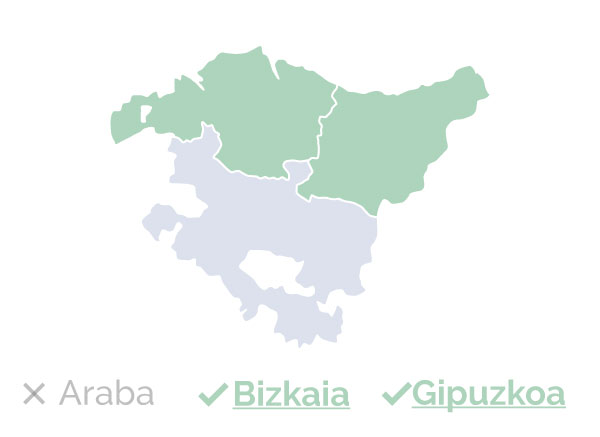

This section contains a series of materials and tools provided free of charge by the HAZI Fundazioa Foundation to any interested party for the purpose of providing general guidance on certain aspects linked to the food and wood value chain, as well as rural and coastal development. Please note that these materials and tools are provided for informational and informational purposes only and are of a general nature, therefore meaning they may not correspond to the specific needs or circumstances of each particular case. The provision of these tools is not intended to replace professional advice that may be necessary for its correct interpretation, completion, application or adaptation under any circumstances. The HAZI Fundazioa foundation disclaims any liability with regard to the use of the tools and materials available in this section and offers no guarantee as to their usefulness, update, accuracy or suitability.
Shall we help you?
If you have any questions, please send them to us through this form and we will contact you.

